How this car centric city has built itself into a corner
By Andrew Stein
How does one of the world’s largest cities end up with one of the weakest public transit systems? Los Angeles chose highways over transit and this car centric city is just beginning to see the lasting effects.
This transit issue however is not exclusive to LA. This is a US issue; a whole nation that is car centric. As a nation we are fifth in vehicles per capita, yet we are the third most populated nation. This American attachment to our vehicles has continually dug deep into our pockets, causing us to spend vast amounts on maintaining this lifestyle. As a nation we estimate that The US has about 2 billion parking spaces for roughly 300 million cars; for comparison the UK has 35 million cars with about 11 million parking spaces. If we were to assume that the average parking space is 9’ by 18’ and multiply that by our 2 billion number we can find that parks in the US total to 30,250km² or 325.6 billion square feet. This would make the US parking spaces the 137th largest country by land mass, sitting between Belgium and Armenia. When put into perspective like this we can see how vehicle focused we are as a nation, most of our infrastructure decisions rely on what’s best for vehicles. And though this issue is not exclusive to LA, I think this US transit problem is best demonstrated by the city of LA. With its enormous amount of vehicles on the road, its expansive highway development, and its lack of efficient transit options it is the prime example of our transportation faults as a country.
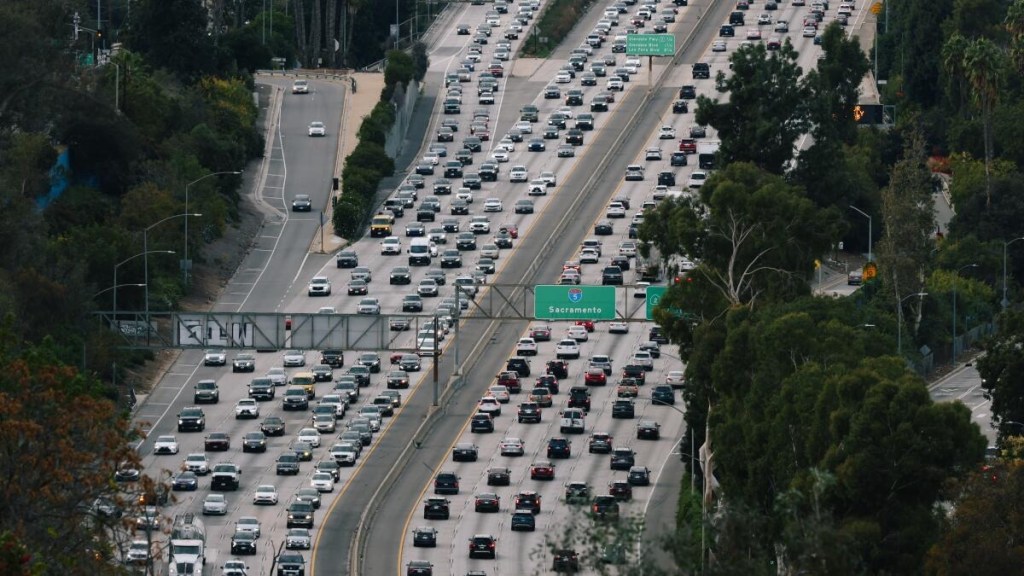
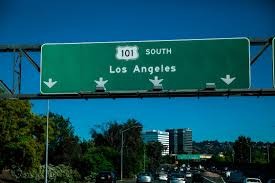
The congestion problems around LA county will only increase, with loads of funds getting continually poured into freeway improvements, it’s only a matter of time before this bandaid solution begins to crumble. The LA metro is the main public transit hub in the city, which encapsulates LA county and its surrounding areas, totalling about 11 million residents. The LA metro saw a total ridership of 26.8 million in the March of 2026, seeing a 1 percent increase from March 2025 having 26.5 total ridership. We can see through the table the overall stagnation in ridership through the past year. Though I believe a lot of factors play a role in this, not just bad planning. I think LA starting as a car centric area has led to continual development to ease vehicle congestion, instead of diagnosing the real issue. I think the main reason for the lack of focus on transit is the overall inconvenience of public transit.
Continue to Part two
Sources: LA Metro RIdership data https://www.metro.net/safety-support/by-the-numbers/
Car Centric America: https://www.theguardian.com/environment/2026/may/06/american-cities-cars-public-transportation
https://www.reddit.com/r/fuckcars/comments/1h2uwub/today_i_learned_the_total_size_of_car_parks_in/
June 26, 2026


Leave a comment