How Road Geometry impacts your driving
You probably aren’t as good a driver as you think you are but don’t fret. Some of our driving mistakes can be attributed to bad road design. When a road is poorly designed we see a higher average number of accidents, and though it still can be attributed to driving behavior, poor road design works against the drivers, increasing the risk of accidents. In this article I want to break down the significance of road design but more specifically road geometry and how each component plays a role in efficiency and drivers safety.
The first major component of road geometry is the sight distance. Sight distance is the visible distance a driver can see on a roadway. It’s basically what’s in your sightline as a driver and it’s important because if you have a poor sight distance you have less time to make quick decisions. There are four main types of sight distances: stopping, passing, intersection and decision. Stopping sight distances measure how much distance you need to safely stop, Passing is how much distance you need to see before passing a vehicle, this is used mostly for two lane highways. Intersection also known as corner sight distance is the amount of space needed to see the crossing traffic on an intersection. Lastly is decision sight distance, which is the visible length needed on a roadway to make a quick or unexpected decision. Each of these play a role in how a road is designed because we usually want the maximum sight distance for each roadway. Sight distances become more complex when the roadway includes lots of horizontal and vertical curves. These add another element of sight design especially with vertical curves dealing with hills and valleys that can drastically change a driver’s sight distance. For example the passing sight distance for a hill’s vertical curves is 7 to 17 times longer than the stopping sight distance. The main goal in this department for the engineers is to make the sight distance longer than the stopping distance, this allows drivers more time to make decisions without making last minute erratic maneuvers. Sight distance is instrumental in road geometry and is a significant aspect in creating safe and efficient roads. So the next time you’re at an blind intersection, blame the engineers, their dismissal of sight distance standards created that blind spot.
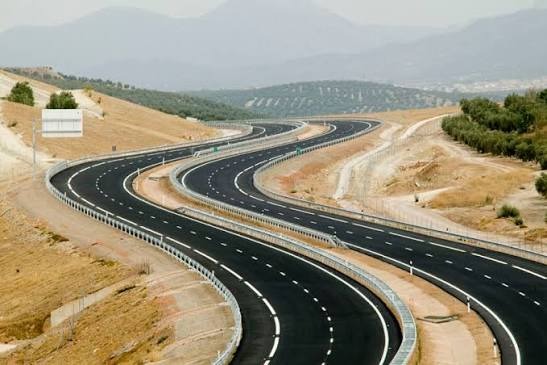
Another significant aspect to road geometry is our alignments. Alignment is the direction of the road, so basically the route the road takes you. Road alignments have two components, vertical and horizontal alignments. The horizontal alignments are the left and right curves of the road, imagine you have an aerial view, the horizontal alignments would be all the curves you see along the landscape. Vertical alignments on the other hand are the up and down slopes of the road. These are harder to distinguish from aerial view, but picture being on the side of the road you can see all the hills and dips of the road, that’s the vertical alignment. Horizontal alignments are more influenced by engineering design. Engineers choose how sharp the curves are. Tighter curves require slower speed limits and increases the crash risk. While gentler curves are safer but are more expensive to build. These are vital engineering choices. Vertical alignments however are not always engineering decisions, a lot of times the vertical alignments are already built into the road and engineers have to find ways to still make it work. For example, if they build roads on hilly terrain. They have two choices: either spend lots of money to excavate the land and make it flat or work with the hills and build the roads on top of the surface. This decision is usually easy because excavating the land is not in the budget, so we tend to try to work with these vertical curves referred to as crests and sags. Crest is the highest point or peak of the hill while a sag is the lowest point or a valley. These crests and sags add another layer to our sight distances. They obstruct drivers’ views and make it more difficult to make quick decisions. Though they can be hazardous we as drivers have to work with these curves and become more aware in these areas to ensure safe roads for all.
The last important component of road geometry that I will be reviewing is the cross section. Imagine you’re standing on the side of the road, facing the street, looking at traffic passing by you. If you were to have a large knife and cut that road in half, then you walk to the front of that cut and look at it, this is your cross section. It represents everything from left to right of the street, the cross section includes the sidewalks, the medians, the bike lane and the roads. The cross section is a very important engineering design decision because it shapes what mode of travel is encouraged on the road. For example in the two images below we see the same street with two different cross sections, one that prioritizes car dependent travel while the other accommodates multiple modes of travel.
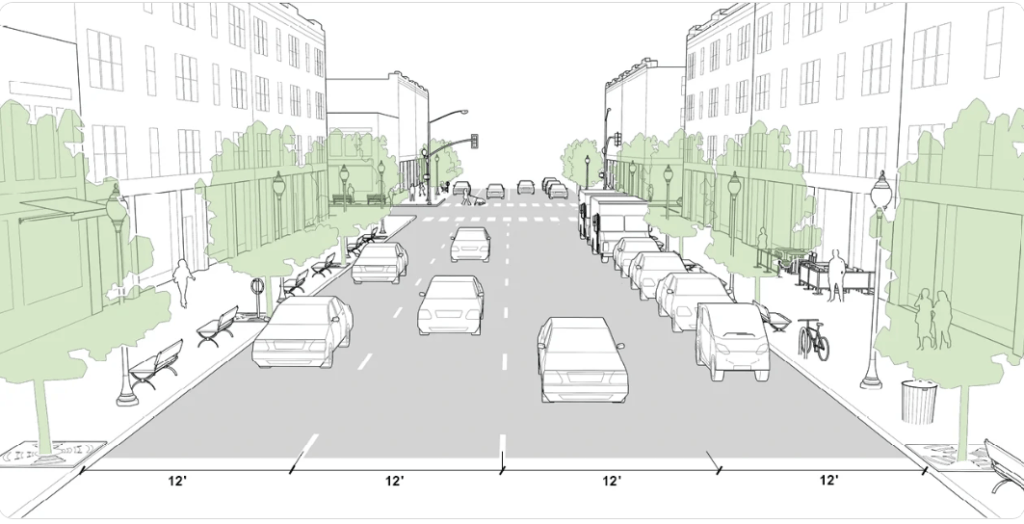
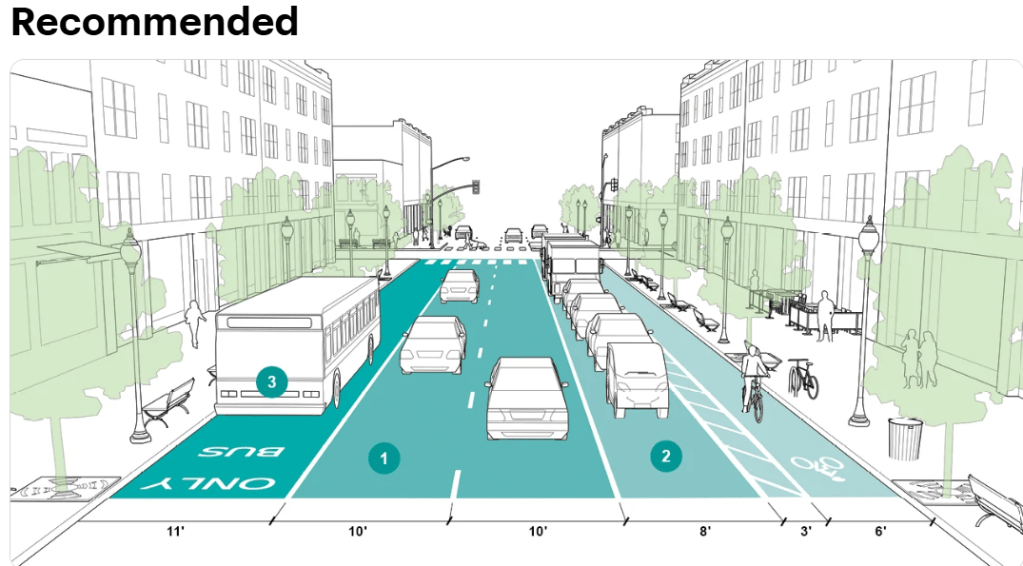
These design decisions hold a lot of weight and heavily influence the productivity of the road. Lane width plays a large role in the cross section, and can shape how dangerous roadways are. “Research has shown that narrower lane widths can effectively manage speeds without decreasing safety and that wider lanes do not correlate to safer streets”. I found that wider lanes tend to lead to higher vehicle speeds, drivers treat it as a runway and personally I understand this feeling when a road is wide, it feels like an open highway and psychologically encourages speeding. With smaller lanes it forces drivers to focus more on the road and gives way for multiple modes of transportation. We can see from the image above the difference between 12 foot lanes and 10 foot lanes and how much space is created by just decreasing the lane width a bit. We can now add a bike lane, a buffer area and maybe even a bus lane if we sacrificed a road lane. The cross section of the road is instrumental in reshaping how we move across our cities. It is an important pillar of road geometry, and leads to a diverse and safe overall road design.
Sight Distance https://dot.ca.gov/-/media/dot-media/programs/design/documents/chp0200-a11y.pdf
Alignments
https://marvelengineers.com.au/engineering-explained-road-geometry/
 Andrewontraffic
Leave a comment