Within this divided country the one thing that we can all agree on is that traffic is the worst. There is no worse feeling than getting off work excited to get back home and seeing all red brake lights ahead on the freeway. A study estimated that the average American driver spends about 50 to 60 hours stuck in traffic every year. Some residents in cities such as LA, Chicago, New York city and Philadelphia all spend over 100 hours stuck in traffic annually. This is so much precious time wasted, and today I’ll be looking at the main causes of traffic congestion and what solutions I’d like to see done to decrease the amount of time we spend in traffic.
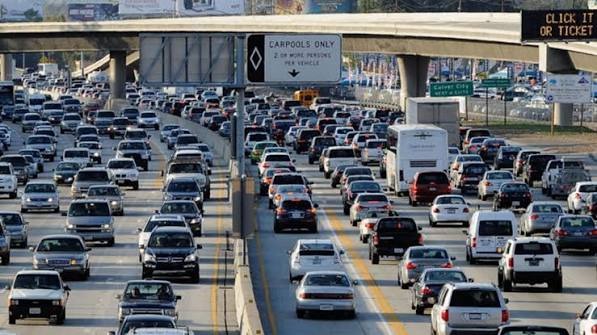
One main reason for our traffic crisis is the sheer volume of vehicles on the road. Roads have a specific capacity limit and if the volume of vehicles exceeds this amount we see congestion form. With less space vehicles brake more causing a chain reaction leading to more traffic. “The DOT states that about half of traffic congestion is the recurring kind, which happens daily and is due to a lack of capacity on the road”. This traffic is so frustrating because there is no actual “reason” for the traffic outside of there being too many vehicles on the road. So once you finally break through this traffic it leaves you frustrated because it seems to have just magically opened up. This vehicle volume issue is a product of our car centric nation, and when we see this type of traffic occurring frequently we know that we need more space, alternate routes and multi modal solutions. The vehicle volume is the blanket reason for most traffic, but our driving behavior in response to the volume is largely what causes this traffic.
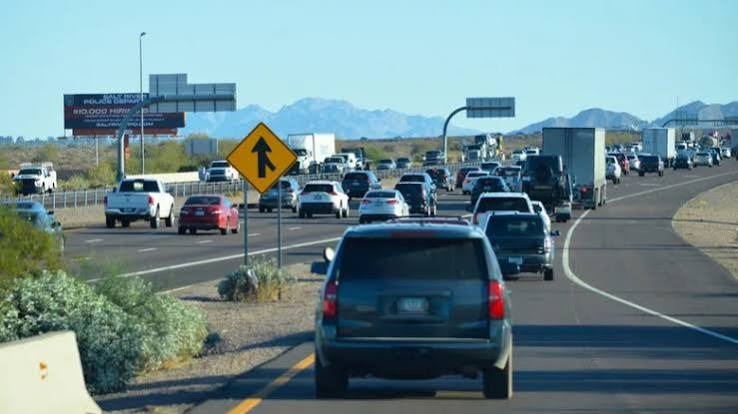
Human driving behavior affects everything on the road. Every small decision we make can create a larger snowball effect on other drivers. Accidents alone account for about 25 percent of traffic congestion. These accidents can lead to further congestion by creating bottlenecks, which is any point on the road where the number of lanes or the available capacity suddenly drops, forcing more cars to squeeze through less space. These bottlenecks account for more than 40 percent of the traffic congestion due to all the merging that occurs. Merging of all types is also a large contributor in congestion, specifically freeway on and off ramp merging, which can slow down the overall traffic flow due to new vehicles slowly entering the freeway. Merging also is the most impacted by driving behavior, I think a lot of drivers don’t merge effectively including me. The book Traffic by Tom Vanderbilt details how a merge should work, “a merge should be just like the zipper on your coat. One car goes from one lane, one from the next lane”. This is so essential because so many drivers will instantly go into an unmerging lane, when it’s more efficient to even out the lanes. Another impact of driving behavior is the phantom jam. This is the type of traffic that I previously mentioned that is caused by excessive braking leading to a chain reaction of brake lights that slows down traffic flow. It’s important for drivers to stay informed on how to be better drivers even though we all think we are the best.
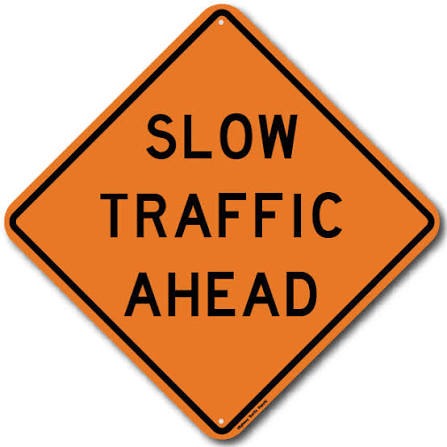
The last cause of traffic that I’ll be reviewing is road work. Road work creates automatic bottlenecks and rubbernecking by drivers. I think there can be an argument made that Roadwork specifically for widening does more harm for traffic congestion than good. In previous widening projects we looked at, we saw many taking 5 to 10 years to finish. This is 5 to 10 years of roadwork and bottlenecks that increase the traffic on the road currently while hopefully decreasing it later on. But as we noted widening only works for a few years at most, so is this roadwork worth it? I’d say no, but unfortunately we don’t have too many options, we have to adapt to the residents’ needs. One of the ways we can combat this traffic is to get more educated on the ways of the road, and to understand how to drive safely and efficiently. Another solution is one I have previously mentioned, which is to spend more time, energy, and money researching more creative and useful multi-modal methods to get more people off the road and reduce the amount of traffic we see on our highways.
https://www.geotab.com/blog/traffic-congestion
Vanderbilt, Tom. Traffic: Why We Drive the Way We Do (and What It Says About Us). Knopf, 2008.
 Andrewontraffic
Leave a comment